

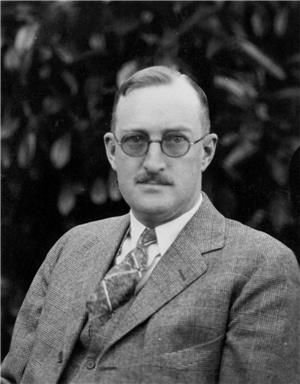
Ask any avgeek about Boeing, and their eyes will instantly light up! Boeing is undoubtedly one of the largest global aerospace manufacturers, a builder of commercial jetliners, fighters, bombers, rotorcrafts, autonomous aircraft, spacecrafts, and even missiles. Boeing is a name that the world has over the years become acquainted to, for all the right reasons and, unfortunately, also for all the wrong reasons. But how exactly, did it start?
William Edward Böing was 33 years old when he had his first flight on the fourth of July 1914. He had accompanied his friend George Conrad Westervelt to celebrate Independence Day by purchasing barnstorming tickets to take turns flying over Lake Washington in Seattle, Washington. By this time he had been a successful entrepreneur in the lumber business and had even started taking flying lessons. His friend George was in the US Navy, and together they had discovered their common interest in aviation.
So in 1916, the two young friends set up Pacific Aero Products Company. The operated out of a former boathouse along the Duwamish River. Using the naval expertise of George, they designed and manufactured their very first aircraft in June of that same year. It was a single engine biplane made of wood, linen covered and with wire bracing, and was equipped with floats. Using the initials of its two designers, they named this plane the B&W Seaplane.
Böing and Westervelt made two of these B&W Seaplanes and then tried to sell them to the US Navy, but the planes rejected. So they found another customer 11,000 kilometres away in New Zealand – the New Zealand Flying School. Their aircraft were used to train many aviators, and by 1919, they had transitioned to express and airmail deliveries.
Surprisingly, in 1917, the very same US Navy which had rejected this plane placed an order of 50 B&W Seaplanes to Pacific Aero Products Co., which had now been renamed Boeing Airplane Company, after the transfer of Westervelt to the East Coast by the US Navy. World War I was raging and they needed to attack from the sky. After the war, Boeing Company ventured into commercial aircraft to service airmail contracts.
Böing continued to grow the Boeing Company, but he would later on in life divest himself of ownership of the company, choosing to shift his interests to horse breeding from 1937 till his death in September 1956.
But even with such a legendary legacy, William Edward Böing was not short of controversy. He faced accusations unethical monopolistic business practices from the United States government during his time manufacturing aircraft.
But perhaps the greatest controversy was his institutionalization of racial segregation on his massive tracts of land. He placed racially restrictive covenants on the land to enforce segregation, forbidding properties from being “sold, conveyed, rented, or leased in whole or in part to any person not of the White or Caucasian race.” Non-whites could occupy a property on the land only if they were employed as a domestic servant by a person of the White or Caucasian race. Though segregation was legal during that time, it will forever be a dent on the great strides he made to build a company we all know and admire!
William Edward Böing was posthumously inducted into the National Aviation Hall of Fame in Dayton, Ohio, in 1966, and the International Aerospace Hall of Fame (IAHF) in San Diego in 1984.
His son, William Edward Böing Jr, died in 2015, at the age of 92, having lived a life of philanthropy as a real estate developer.
