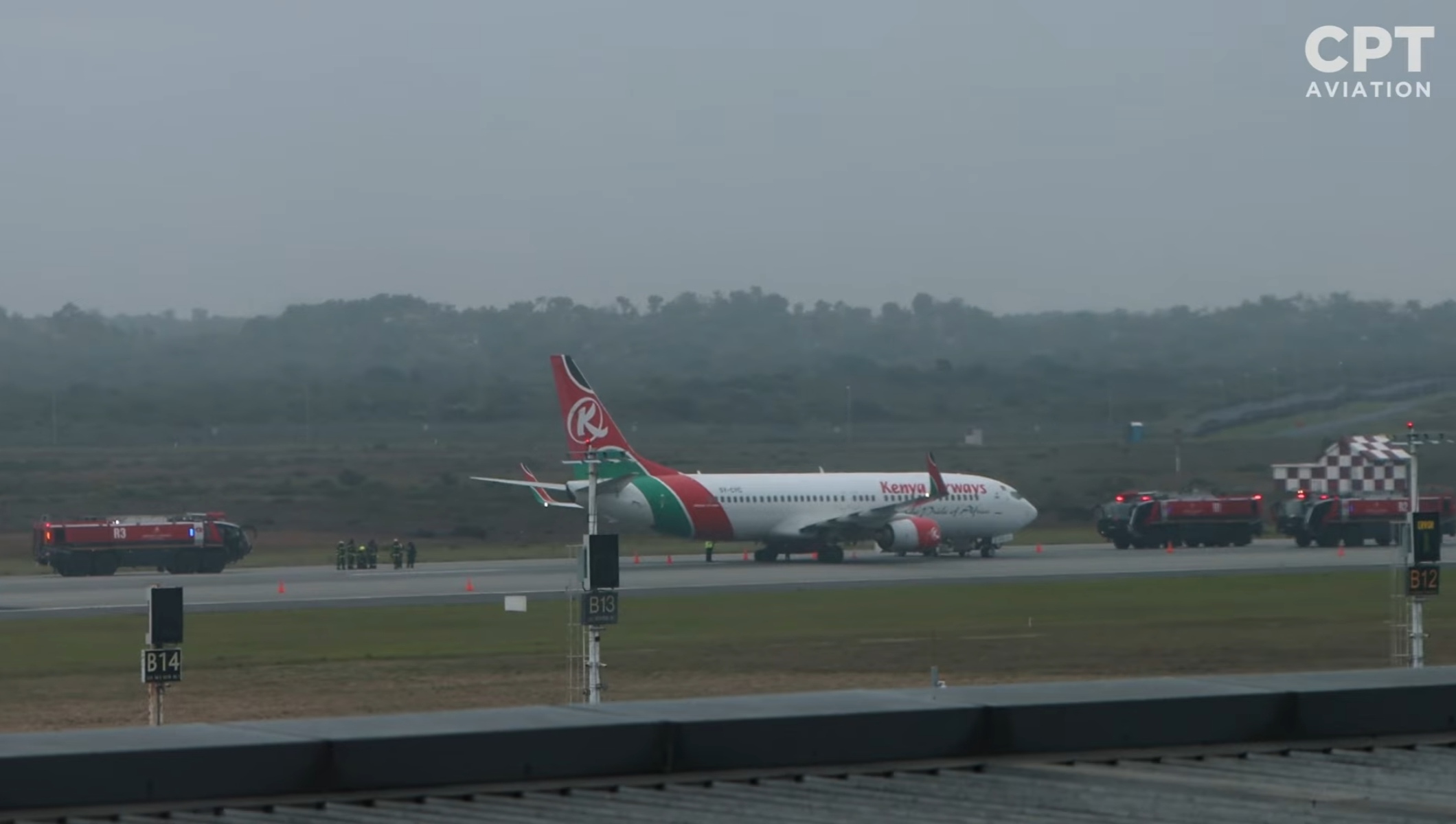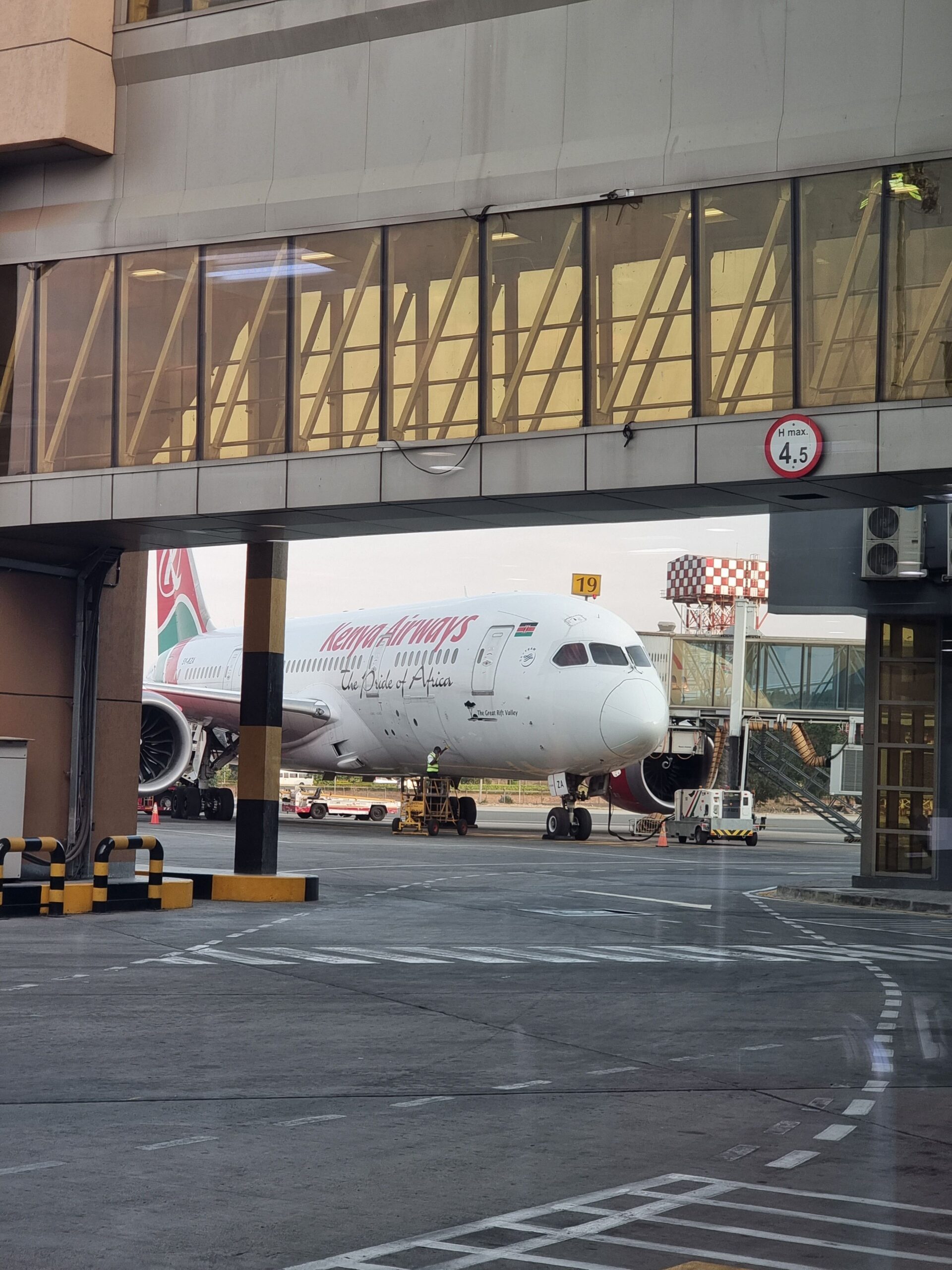
Nairobi’s Jomo Kenyatta International Airport is a beloved part of Kenya’s heritage, and carries one of Kenya’s most recognizable acronyms – JKIA. It has facilitated transport of Kenyan citizens, products, and leaders, both dead and alive. Its strategic placement along the popular Mombasa Road (A104), and right next to the famous Nairobi National Park has garnered international recognition, despite the fact that it looks old, feels old, and sometimes leaks when caught in the rain.
JKIA (ICAO: HKJK, IATA: NBO) was opened in March 1958 as Embakasi Airport, during Kenya’s dying colonial days. Its construction story, however, is marred by the use of forced labour, composed primarily of thousands of Mau Mau detainees arrested by the British colonial government after the 1952 declaration of a state of emergency. Sources say that many of these workers opted for suicide rather than be subjected to the torturous exercise of “Work till you die!”
After Kenya’s independence and throughout the 70s, Embakasi airport underwent significant expansion and improvements, including a new international and domestic passenger terminal building, a dedicated freight terminal, new taxiways, aprons, internal roads, car parks, police and fire stations, a State Pavillion, airfield and roadway lighting, fire hydrant system, water, electrical, telecommunications and sewerage systems, a dual carriageway passenger access road, security drainage, and the construction of the main access road to the airport (Airport South Road). In fact in 1976, its iconic ring building took shape and still stands today as Passenger Terminal 1.
In 1991, the Kenya Airports Authority was set up under an Act of Parliament to construct, operate and maintain aerodromes including the now called JKIA (renamed after Kenya’s first president Jomo Kenyatta who died in 1978). Throughout the 1990s, Kenya Airports Authority (abbreviated KAA) focused on modifying existing infrastructure, increasing airside safety, and addressing the capacity strain brought about by the surge in passenger numbers after the KQ/KLM alliance. JKIA had one runway 06/24, 4117 metres long by 45 metres wide.
In 2005, KAA announced plans to expand JKIA from 25,662m2 to 55,222m2 at a cost of US$115 million. The expansion would include a new Terminal 4, more parking space and additional taxiways. Interestingly, the idea of a second runway was still under debate.
Then in 2013, with JKIA having to squeeze 6.5 million passengers in a room built for 2.5 million passengers a year, and after a mysterious fire gutted the main terminal building, KAA launched the Greenfield Terminal Project at a cost of US$650 million. By the way, the Kenyan Government had brought in the United States Federal Bureau of Investigations to investigate the fire. The FBI concluded that the fire had been caused by faulty electric wiring, and not a terrorist attack. Remarkably, the next month after the fire, the Westgate Mall in Nairobi was attacked by armed militia from the Al Shabaab terrorist group in neighbouring Somalia.
Anyway, two Chinese firms were awarded the Greenfield Terminal Project tender – Anhui Construction Engineering Group Limited and China Aero-Technology International Engineering Corporation.
They started digging.
But in 2016, scandals rocked the project, and led to an immediate cancellation of the project, though it was not immediately clear who had ordered the cancellation. The Kenyan Government under President Uhuru Kenyatta cited infeasibility due to lack of funds while the Kenya Airports Authority cited unprofitability. There were also questions raised over how the tender had been awarded to the Chinese without cabinet approval. And of course the contractors weren’t happy. They sued the Kenyan Government for KES 17.6 billion, but later settled for around KES 5 billion.
A second runway had still not been built but hey, at least the Government made up for it by building an expressway between 2020 and 2022! Now passengers who had been wearied by the snarl-up at the airport could escape the snarl-up on the highway. That expressway is 27 kilometres long and cost the Kenyan Government up to US$650 million. The same Kenyan Government which had said it couldn’t raise funds for an airport upgrade!
In February 2026, KAA launched the “Masterplan for Jomo Kenyatta International Airport”. The Kenyan Ministry of Roads and Transport signed US$ 1.2 billion contract with the China Road and Bridge Corporation (CRBC). The planned upgrade include a new X-shaped terminal, expansion of aprons and taxiways and other technological improvements.
But again, no second runway, due to “cost related issues”. Cabinet Secretary for Roads and Transport Davis Chirchir said that the current runway at the airport is good enough and there is no need for a second one yet.