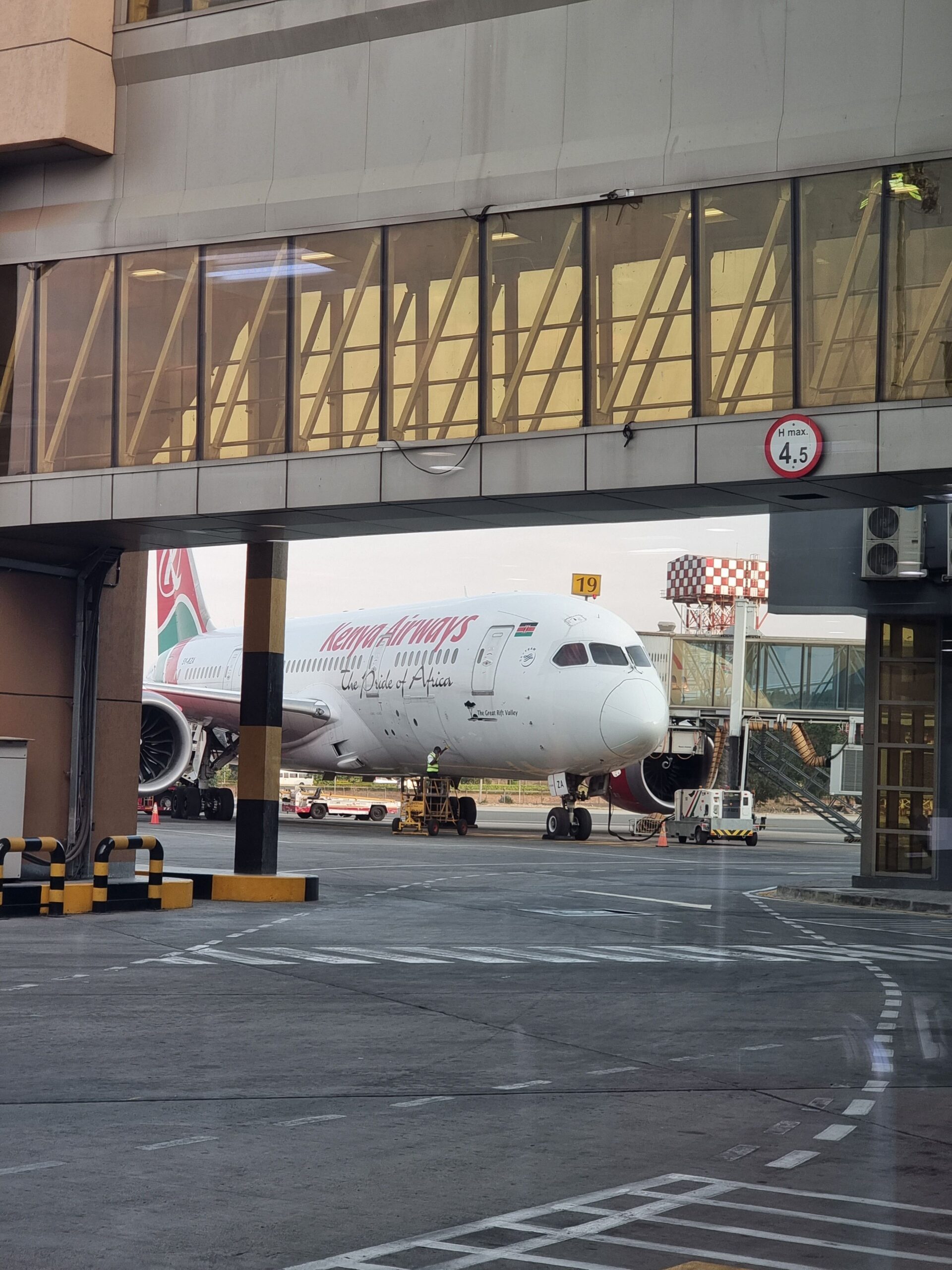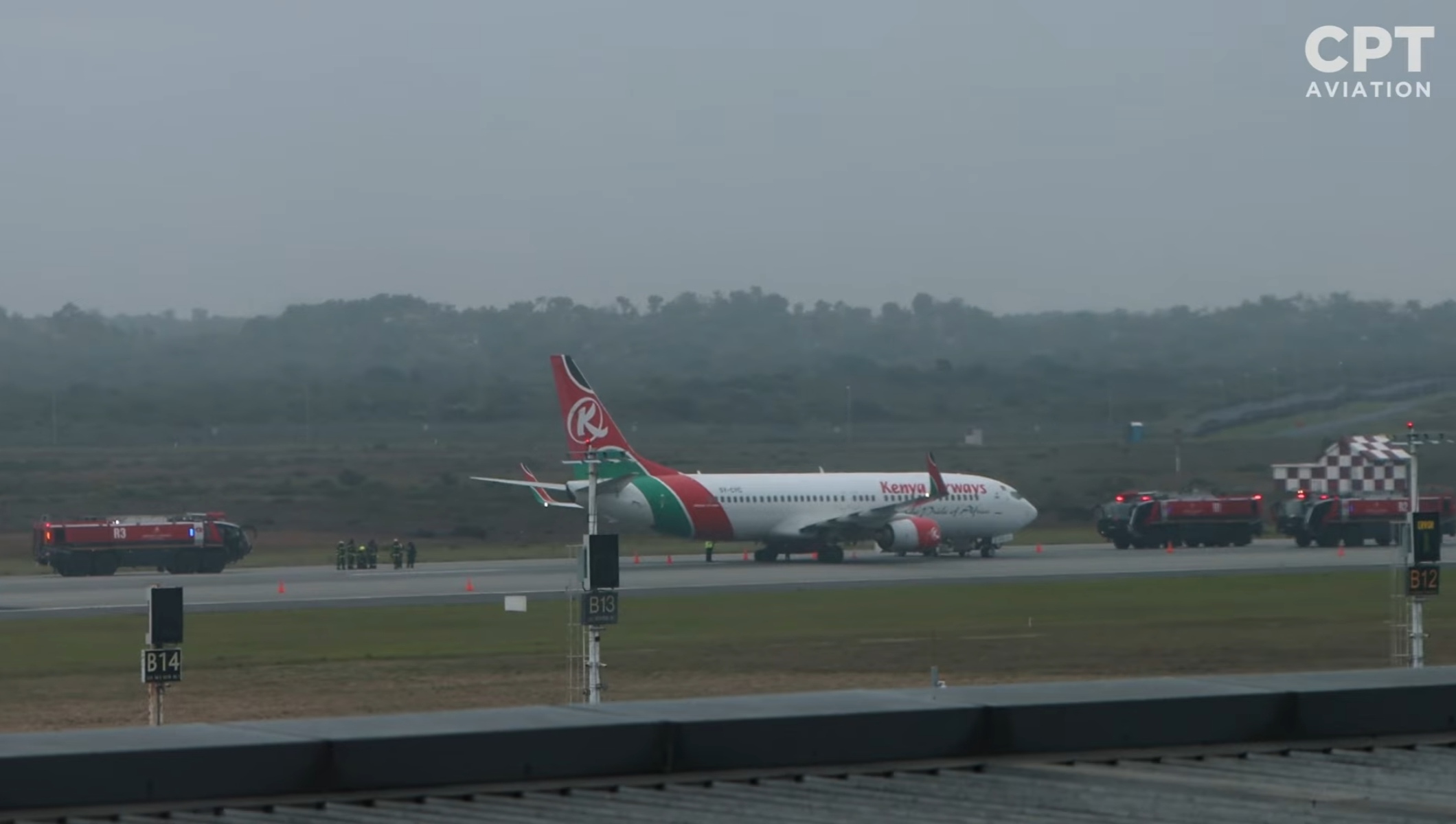
Kenya Airways Flight KQ784 suffered a tyre burst incident upon landing at South Africa’s Cape Town International Airport (ICAO: FACT, IATA: CPT) Runway 19 on the afternoon of 4th August 2026. In an update released by the airline’s Corporate Communications Department, it confirmed that the aircraft had departed Nairobi on a scheduled service and landed safely, but had encountered a tyre burst upon landing. As a result the return leg Flight KQ785 would be cancelled as the technical team worked to get the aircraft fixed.
The aircraft involved, an eleven year old Boeing 737-800, with registration number 5Y-CYC, was delivered brand new to Kenya Airways in January 2015, upon production completion from Boeing’s Renton Factory in Washington State, USA. Its Manufacturer Serial Number (MSN) is 43400, and it is powered by two CFMI engines.
The incident caused a closure of the affected runway for almost 4 hours, according to The Aviation Herald, but Kenya Airways confirmed that all passengers and crew disembarked safely and had been transported to the airport terminal.
Aircraft tyres are robustly constructed to withstand extremely heavy loads for short durations. They are built using a natural and synthetic rubber compounds combined with reinforcing fabrics like nylon, aramid (Kevlar), and steel, arranged in either one of two configurations: cross ply and radial ply. They are significantly inflated to 200 psi, predominantly with Nitrogen gas, which is non reactive in the event of an explosive (combustive) deflation. In spite of this construction, tyre bursts still do occur upon landing because of instant skin friction, wear and tear, and foreign object debris damage.
However, wheel replacement is a common fix done by aircraft technicians and line engineers, following procedures recommended in the maintenance manual by the manufacturer. True to this, 5Y-CYC was already in service a day after the incident.